Future Simple for Formal Promises: "The Company Will Provide"
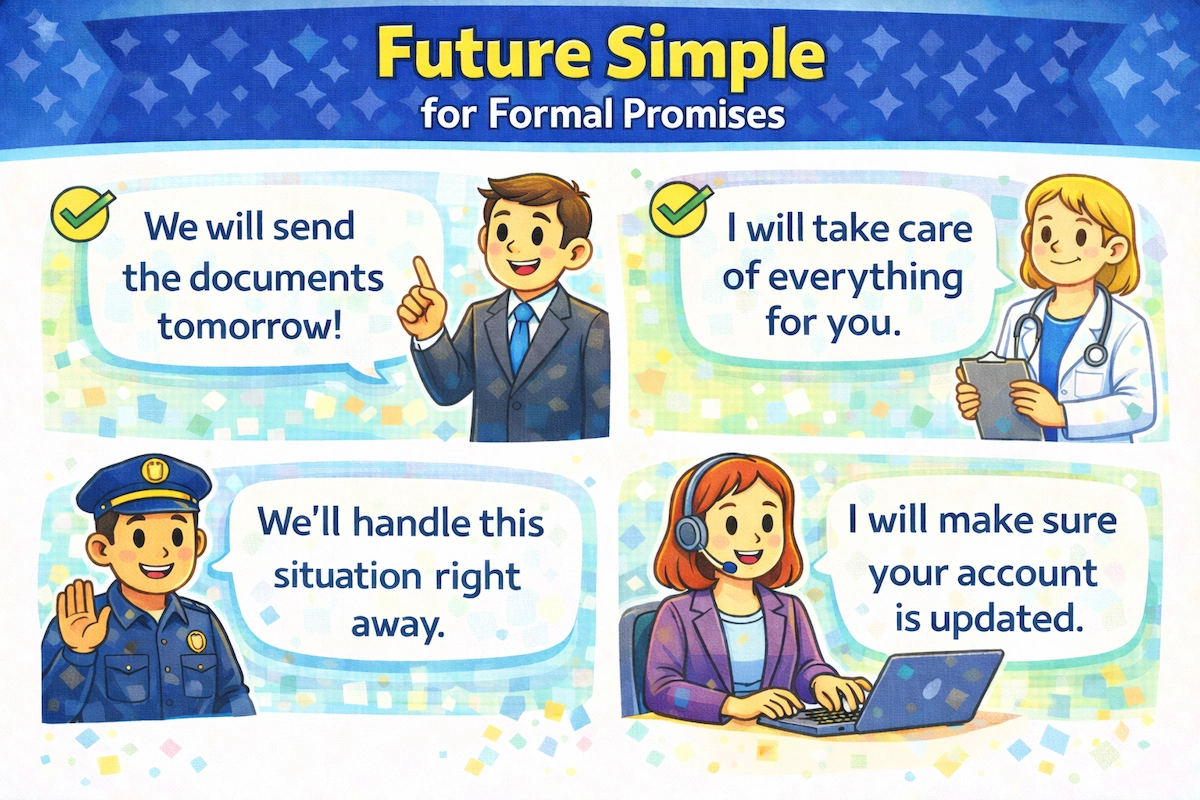
This Tenses in Action usage guide explains how the future simple with “will” is used in formal promises. Learn why contracts and official offers rely on “will” to show obligation, certainty, and guaranteed future actions, and how it differs from other future forms.
If you’ve ever read an employment contract, company policy, or formal offer letter, you’ve likely seen sentences like “The company will provide health insurance” or “Payment will be made within thirty days.” These sentences rely on one tense again and again: the future simple with will.
In everyday conversation, will often sounds casual or flexible. But in formal contexts, especially legal and professional writing, it takes on a much stronger meaning. It doesn’t just talk about the future — it expresses commitment, obligation, and certainty.
In this usage guide, you’ll learn why future simple is the tense of choice for formal promises, how will functions in contracts and official documents, and how its meaning differs from other future forms like going to or the present continuous.
What Is the Future Simple Tense?
The future simple tense is formed using will + base verb. It is one of the most common ways to talk about future actions in English.
The company will provide training for new employees.
Grammatically, the structure is simple. What changes is the meaning, depending on context.
In informal speech, will can express decisions made at the moment, predictions, or offers. In formal writing, however, its role is more specific and deliberate.
Why “Will” Is So Common in Formal English
Formal documents aim for clarity, precision, and enforceability. The word will helps achieve all three.
When used in contracts and official statements, will signals that something is not optional, hypothetical, or casual. It indicates a binding future action.
The company will comply with all applicable regulations.
This sentence does not describe an intention or a plan — it describes an obligation.
“Will” as a Marker of Commitment
In formal contexts, will functions almost like a promise. It tells the reader that the speaker or organization is committing to a specific future action.
The service provider will deliver the final report by June 30.
The expectation here is clear: delivery is guaranteed, not merely expected.
This is why will appears frequently in:
- Contracts
- Employment agreements
- Official offers
- Company policies
- Terms and conditions
Future Simple vs. “Going To” in Formal Writing
Many learners ask why formal documents don’t use going to. The reason is tone and certainty.
Informal: We’re going to provide additional support.
Formal: We will provide additional support.
Going to often suggests intention or planning. Will suggests obligation and assurance.
In legal or professional contexts, intention is not enough. The language must express commitment.
“Will” vs. Present Simple in Formal Documents
Some legal documents use the present simple to express general rules.
This agreement applies to all employees.
However, when referring to specific future actions, will is preferred.
This agreement will terminate on December 31.
The present simple states facts. The future simple defines what will happen.
How “Will” Creates Legal Clarity
In contracts, ambiguity can lead to disputes. Will reduces ambiguity by clearly assigning responsibility.
The supplier will replace defective items at no additional cost.
This sentence leaves no doubt about who must act and what action is required.
Words like may or can would weaken the obligation.
“Will” vs. “Shall” in Modern English
Traditionally, legal English used shall to express obligation. Today, many organizations prefer will because it is clearer and more natural.
Older style: The company shall provide insurance coverage.
Modern style: The company will provide insurance coverage.
Modern legal drafting often replaces shall with will to avoid confusion and outdated tone.
Using “Will” in Formal Promises and Guarantees
Will is commonly used in promises made by organizations, not individuals.
We will ensure confidentiality at all times.
The company will not share personal data without consent.
These sentences communicate assurance and responsibility.
Negative Forms: “Will Not” in Formal Contexts
The negative form will not (or will not be liable) is equally important in formal English.
The company will not be responsible for delays caused by external factors.
This structure clearly defines limits and exclusions.
Common Learner Mistakes with Future Simple
Some learners avoid will because it feels too strong. In formal English, that strength is intentional.
- Using going to in contracts
- Using vague future expressions
- Avoiding future tense altogether
In professional writing, clarity matters more than softness.
When Not to Use “Will”
Despite its usefulness, will is not always appropriate.
Avoid it when:
- Speculating about uncertain outcomes
- Describing personal hopes
- Making casual future plans
Informal: I think sales will improve.
This sentence expresses prediction, not obligation.
Why Understanding This Tense Improves Professional English
Mastering how will works in formal promises helps you read contracts more accurately and write professional documents with confidence.
It also prevents misunderstandings, especially when English is used as a second language in international business.
Final Thoughts: “Will” Means More Than the Future
In formal English, will is not just a future marker. It is a signal of responsibility, certainty, and commitment.
When you see “The company will provide”, you are reading a promise — not a suggestion.
Understanding this nuance helps you navigate professional English with precision and confidence.