7 Phrases to Use When You’re at a Tourist Information Center
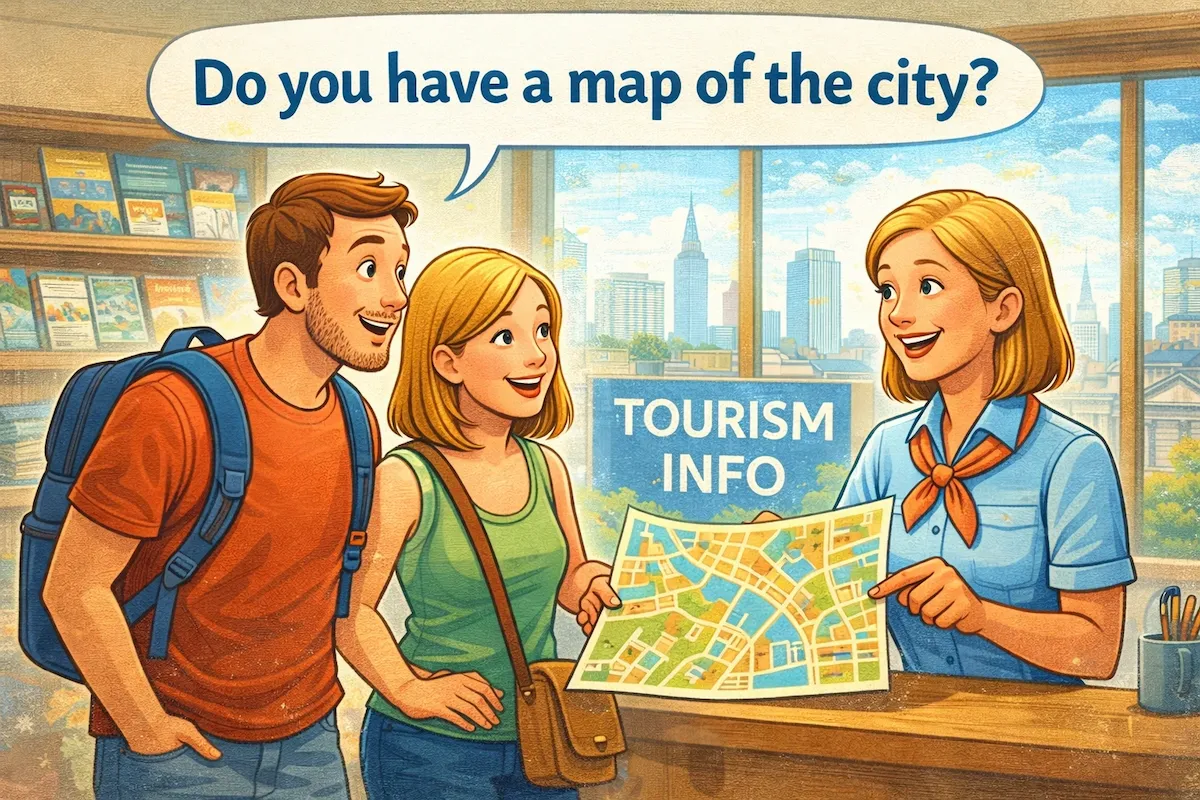
This Travel English usage guide teaches 7 practical phrases for tourist information centers. Learn how to ask for maps, transportation help, brochures, and local recommendations using polite, natural English that works in real travel situations.
One of the most useful — and often overlooked — places for travelers is the tourist information center. Whether you’re visiting a big city or a small town, these centers exist to help visitors make the most of their trip.
The problem? Many travelers don’t know what to say once they’re there. They freeze, use overly simple English, or avoid asking questions altogether. As a result, they miss out on maps, local tips, hidden attractions, and practical advice that could improve their entire travel experience.
In this Travel English usage guide, you’ll learn 7 essential English phrases you can confidently use at any tourist information center. These phrases are polite, natural, and flexible — perfect for real conversations with staff.
Why Tourist Information Centers Matter
Tourist information centers are designed to help you:
- Find maps and brochures
- Discover local attractions
- Understand transportation options
- Get advice from locals
Knowing how to ask the right questions in English can turn a confusing trip into a smooth and enjoyable one.
Phrase #1: “Do you have a map of the city?”
This is often the very first thing travelers ask — and for good reason.
Do you have a map of the city?
This phrase is polite, direct, and universally understood. You can also adapt it:
Do you have a walking map? Do you have a public transport map?
Phrase #2: “What places do you recommend visiting?”
This phrase invites local insight rather than generic tourist advice.
What places do you recommend visiting?
It sounds natural and open-ended, encouraging the staff to share their expertise.
Phrase #3: “Are there any attractions nearby?”
When time or distance is limited, this phrase is extremely useful.
Are there any attractions nearby?
You can add context:
Are there any attractions nearby that are free? Are there any attractions nearby for families?
Phrase #4: “How can I get there by public transport?”
Transportation questions are common — and this phrase is clear and polite.
How can I get there by public transport?
The phrase avoids slang and works in both formal and casual settings.
Phrase #5: “Do you have any brochures or guides?”
Tourist centers often have printed materials many travelers forget to ask for.
Do you have any brochures or guides?
You can specify:
Do you have any food guides? Do you have brochures for museums?
Phrase #6: “Is there anything I should know before going?”
This phrase is excellent for cultural tips and practical warnings.
Is there anything I should know before going?
It may lead to advice about:
- Opening hours
- Local customs
- Weather conditions
- Ticket requirements
Phrase #7: “Can you recommend a local restaurant?”
This is one of the most valuable questions you can ask.
Can you recommend a local restaurant?
Unlike online reviews, this often leads to authentic, less touristy places.
Politeness Tips at Information Desks
Politeness matters in face-to-face travel English.
- Use “please” when appropriate
- Smile and make eye contact
- Say “thank you” at the end
Thank you for your help. I really appreciate it.
Common Mistake: Being Too Vague
Incorrect: Where go?
Better: What places do you recommend visiting?
Clear questions lead to better answers.
Practice Test
Please answer the following questions. To see the correct answer, please click the arrow icon.
Which phrase is best for asking about transportation?
Answer: How can I get there by public transport? Explanation: It is clear, polite, and specific.
How do you politely ask for local advice?
Answer: What places do you recommend visiting? Explanation: It invites personal recommendations.
Which phrase helps you avoid tourist traps?
Answer: Can you recommend a local restaurant? Explanation: Locals often suggest more authentic places.
Why is “Is there anything I should know before going?” useful?
Answer: It reveals practical and cultural tips. Explanation: Staff may warn you about rules or conditions.
Why These Phrases Improve Your Travel Experience
Using complete, natural English sentences:
- Builds confidence
- Encourages better service
- Creates positive interactions
Travel English is not about perfection — it’s about clarity.
Final Thoughts: Ask and Explore
Tourist information centers are there to help, but only if you ask.
By mastering these seven phrases, you’ll feel more comfortable starting conversations, asking questions, and discovering places you might otherwise miss.
The best travel experiences often begin with a simple, well-phrased question.