Usage Guide

Gilt vs. Guilt: Why One is Gold and the Other is Heavy
This confusing-words usage guide explains the difference between “gilt” and “guilt.” Learn how spelling changes meaning, why these homophones cause erro...

Ingenious vs. Ingenuous: Are You Brilliant or Just Naive?
This confusing-words guide explains the difference between ingenious and ingenuous. Learn why ingenious means clever and inventive, while ingenuous means innoce...
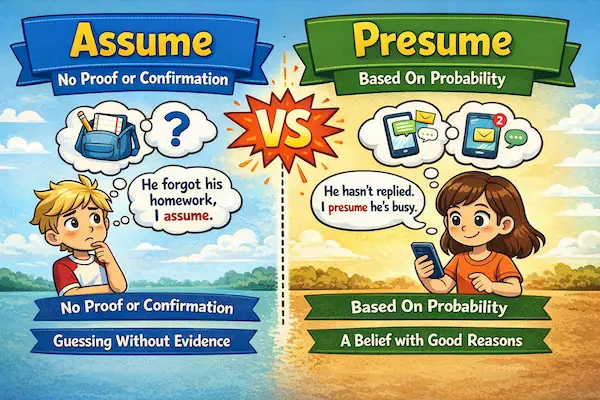
Assume vs. Presume: The Subtle Difference You Need to Know
This guide explains the difference between “assume” and “presume.” Learn when assume suggests guessing without evidence and when presume reflects logica...
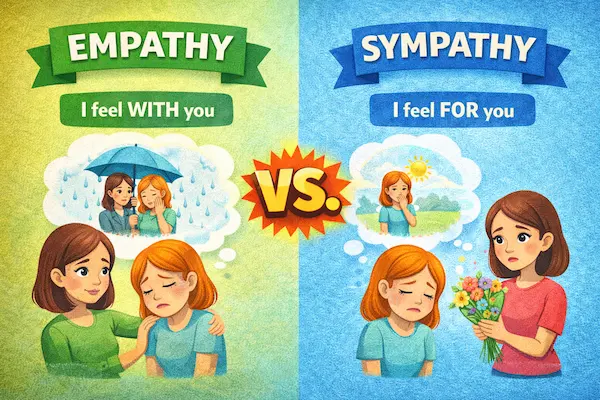
Empathy vs. Sympathy: How to Use These Words Correctly in Socializing
This guide explains empathy vs sympathy with clear definitions, examples, and social contexts. Learn why empathy means feeling with someone, sympathy means feel...
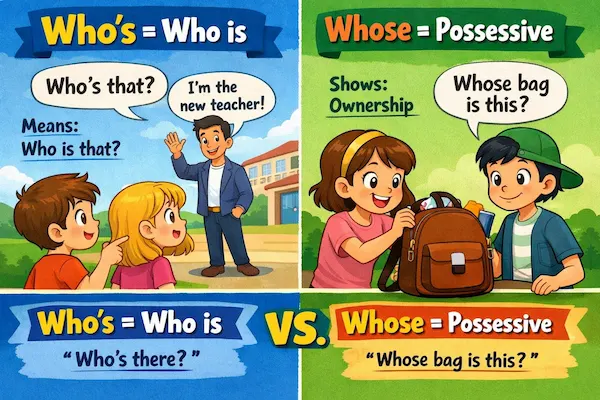
Who’s vs. Whose: The Simple Question That Clears the Confusion
This confusing-words usage guide explains how to correctly use “who’s” and “whose.” Learn why one is a contraction and the other shows possession, how...