Common Mistakes
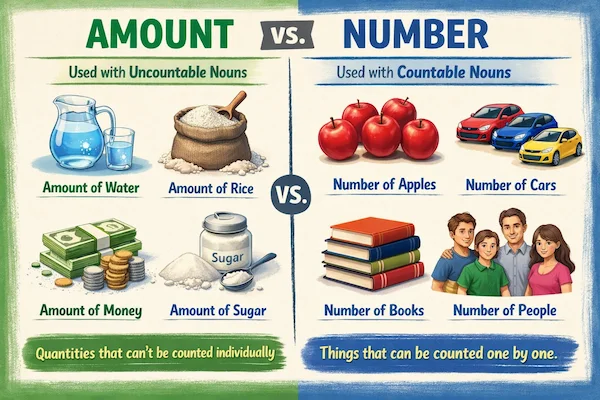
"Amount" vs. "Number" – Grammar Rules for Mass and Count Nouns
This common-mistakes usage guide explains the difference between “amount” and “number.” Learn how mass nouns and count nouns work, see common errors, an...
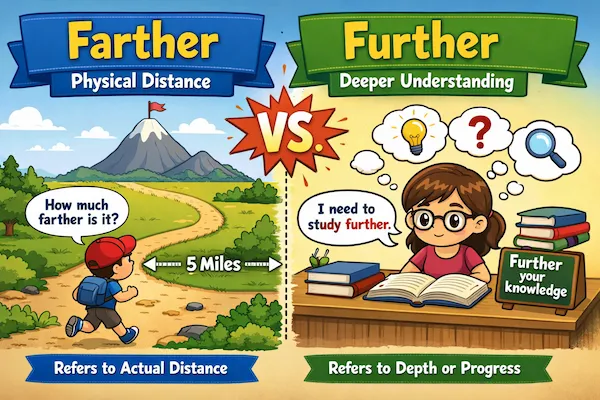
"Farther" vs. "Further" – Measuring Distance and Ideas
This guide explains the difference between “farther” and “further” in English. Learn when to use farther for physical distance and further for abstract ...
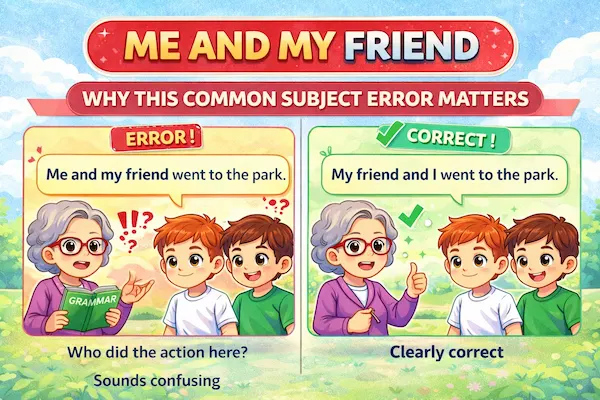
"Me and My Friend" – Why This Common Subject Error Matters
This common-mistakes usage guide explains the difference between “me and my friend” and “my friend and I.” Learn how subject and object pronouns work, w...
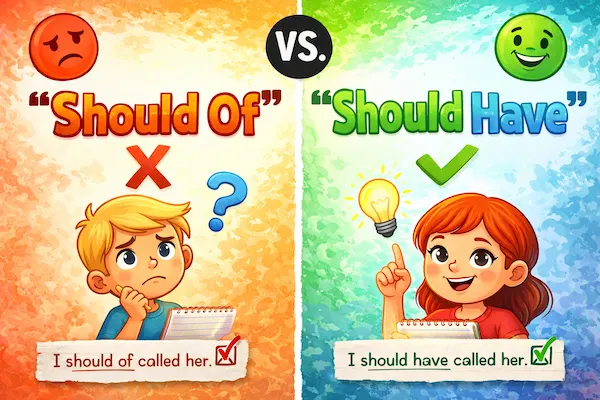
"Should Of" vs. "Should Have" – The Sound Trap You Need to Avoid
This common-mistakes guide explains why should of is incorrect and how should have functions as a past modal. Learn how pronunciation causes the error, how to f...
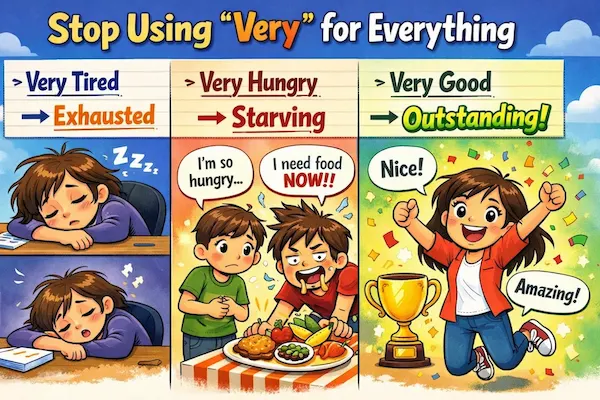
Stop Using "Very" for Everything – 10 Stronger Adjectives to Use Instead
This Common Mistakes usage guide explains why relying on “very” weakens your English. Learn ten powerful adjectives that replace “very + adjective,” see...